
Feel log · 37 games measured on four controllers this year Latency figures published in every review
Controller Down emblem Controller Down Reviews that start at your hands
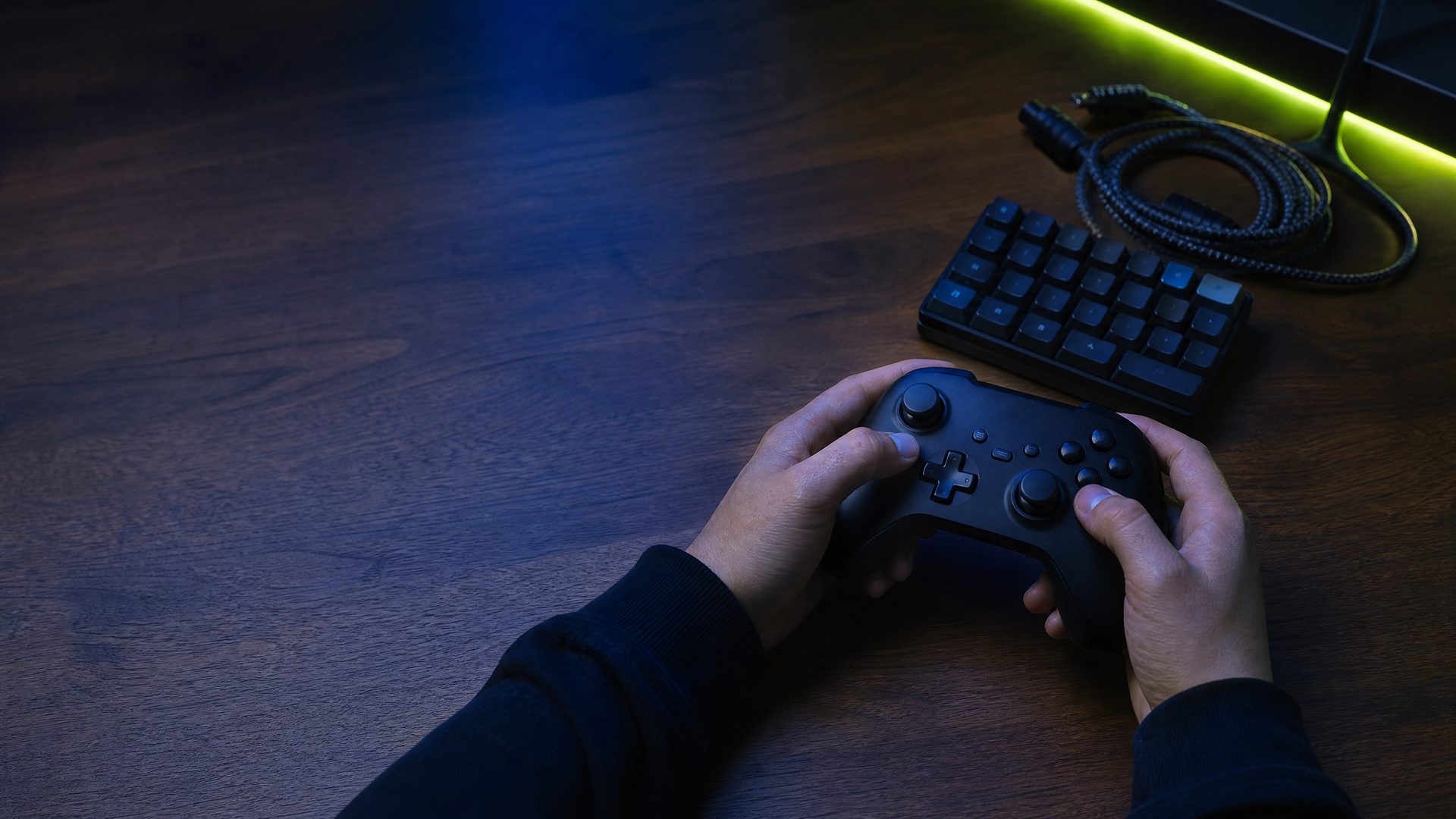
Two hands resting on a black game controller on a dark walnut desk under indigo light
Input first, everything else second

Every review here begins with what the game does to your thumbs

Story, art and structure all matter, and we get to them. But a game is a machine you operate, and if the operating is wrong nothing downstream survives it. So we start with the controls and we measure them.

37Games measured
4Controllers per test
2,900Latency samples
0Sponsored reviews
How a review is built

Four stages, and the first three happen before we write a word about plot

The order is fixed, because the order is what makes one review comparable to the next.

Stage 01

Response

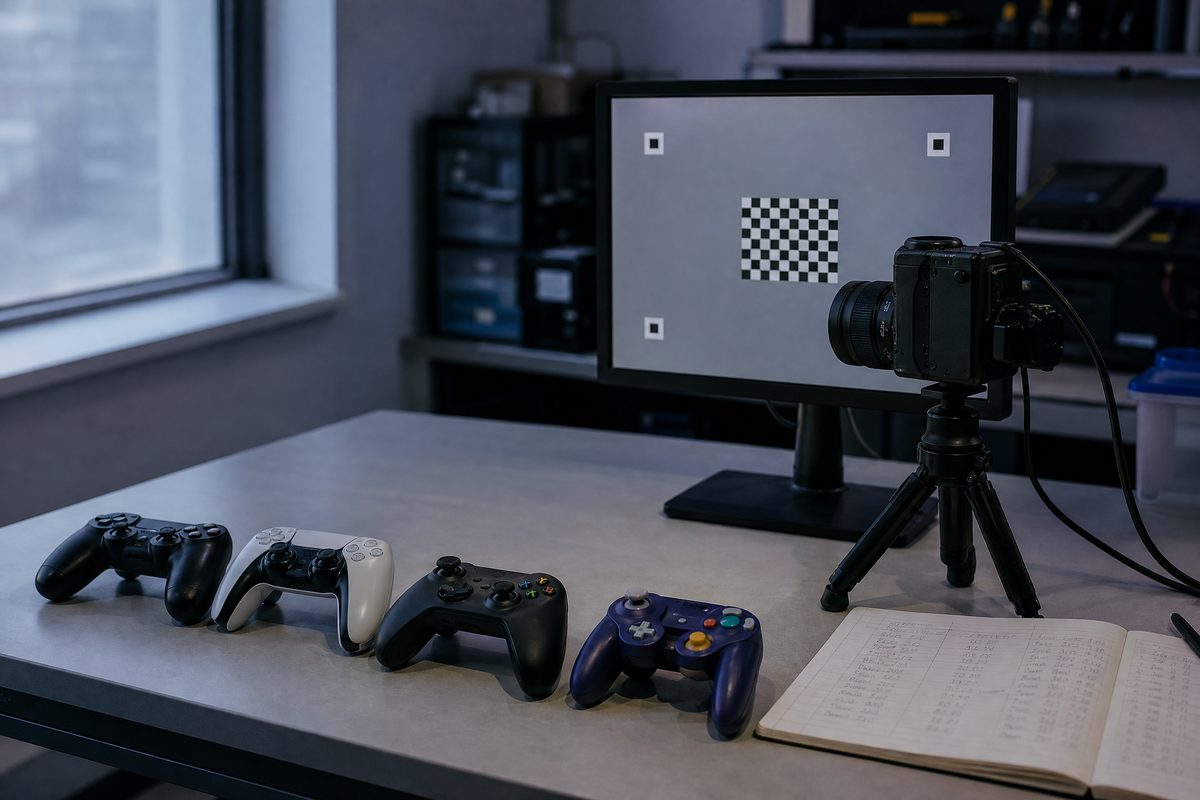
End-to-end delay from button press to visible reaction, filmed with a high-speed camera rather than reported by the game itself. Four pads, two keyboards, 100 samples each.

Stage 02

Weight

How long an action commits you. We time animation locks, turn rates, recovery windows and the exact number of frames in which a decision cannot be reversed.

Stage 03

Readability

Whether the game tells you what it just did. We record failures and check, one by one, whether the reason was visible on screen at the moment it happened.

Stage 04

Everything else

Only now do we discuss writing, structure, art and pacing — with the mechanical facts already on the table, so praise and complaint both have something to stand on.

Position

"Tight controls" is not a review. It is a feeling somebody had once and never checked.

The phrase appears in almost every positive review of an action game and it carries no information whatsoever. Two games described as tight can differ by forty milliseconds of response and by half a second of animation commitment, which is the difference between a game that feels like an extension of your hand and one that feels like sending instructions by post.

We think the honest thing is to publish the numbers and then say what they mean. A 90 millisecond response is fine in a strategy game and disqualifying in a fighting game, and the only way to make that judgement usefully is to know the figure first.

  • Measured externally. A game cannot honestly time its own delay, so we film the screen and count frames instead of trusting an in-engine counter.
  • Four pads minimum. Response varies by controller more than most reviews admit, and we publish the spread rather than a single convenient number.
  • Commitment matters more than speed. A slow game with honest recovery windows feels better than a fast one that steals control mid-animation.
  • Failure must be legible. If we die and cannot say why from what was on screen, that is a design fault and it goes in the review.
A testing desk with four game controllers in a row, a camera on a tripod aimed at a monitor, and a notebook of handwritten figures
Recent reviews

Measured, played to the end, then written up

Each entry lists the response figure we recorded, the hours played and the final score.

The scale

One number, weighted toward the part you actually touch

Feel is roughly half the score here. That is unusual, deliberate, and stated on every review page so nobody has to guess.

From readers

What people say the numbers are for

"I play on a pad and half of all reviews are written by people on a keyboard who never mention it. Publishing the figure for each controller is the single most useful thing on this site."

Reader · action games

"The readability section talked me out of a game I was certain I wanted. It turned out my objection to the last three games I bounced off was exactly the thing you measure."

Reader · platformers

"You are the only place I have seen treat animation commitment as a separate axis from response time. Those are two different problems and everybody else lumps them together."