Controller Down is an independent games review site built around one idea: that the feel of a game can be measured, and that measuring it produces better criticism than describing it. This page explains the rig, the process and the things we will not do.
A game is the only art form you operate. Everything else it does — the writing, the score, the level design — reaches you through a layer of buttons and sticks, and if that layer is wrong the rest arrives distorted. We think reviews should establish the quality of that layer before they discuss anything that sits on top of it.
The practical reason is more mundane: input is the part of a game most often described in language that means nothing. "Responsive", "tight", "weighty" and "floaty" are all doing real work in a reader's head and none of them carry a value. Replacing four adjectives with a number and then explaining what the number means is simply more useful.
A fixed test machine that has not changed configuration in nineteen months, one 60 Hz reference monitor, a 480 frame-per-second camera on a small tripod, four controllers, two keyboards, one arcade stick and three racing wheels. Nothing exotic and nothing expensive. The important property is that it does not change between reviews.
Response is measured by filming the screen while a finger presses a button, then counting frames between the button bottoming out and the first pixel change. It is a crude method and it is honest: it captures the whole chain, including the parts a game cannot see.
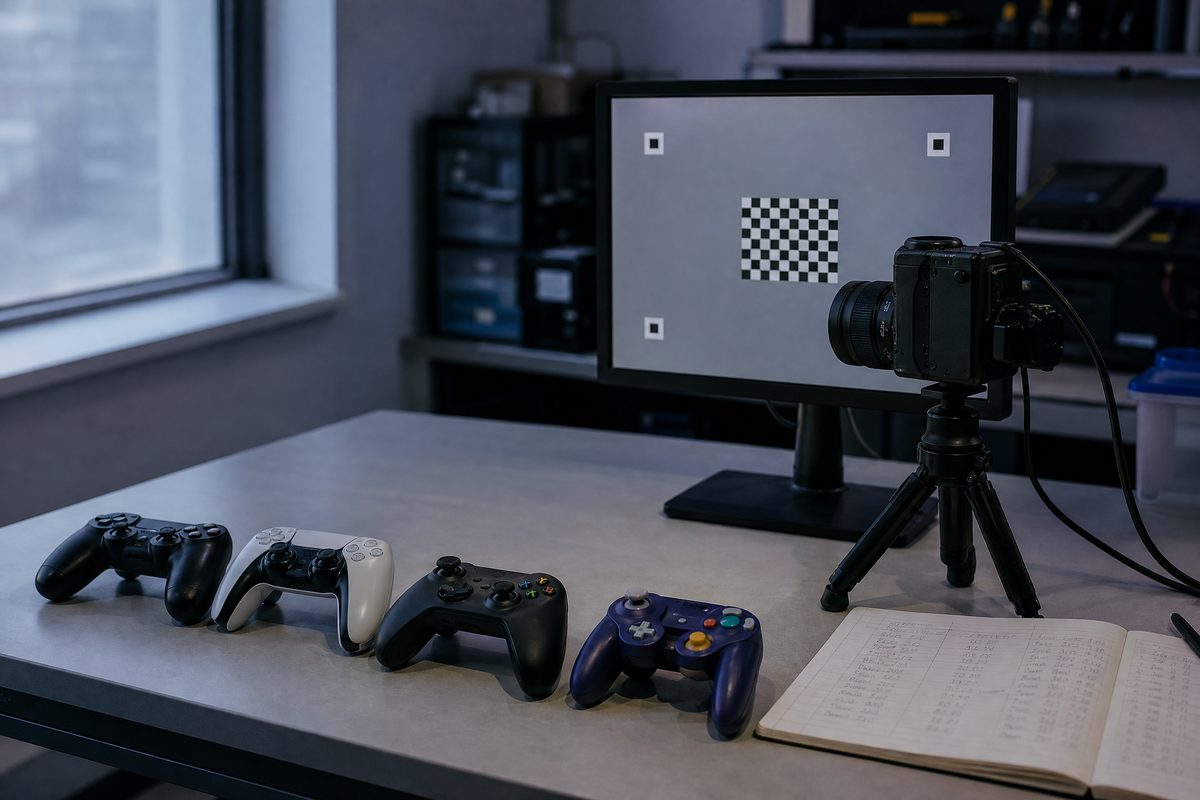
Before playing properly, we take 100 response samples per device on a clean save. Doing this first prevents familiarity from colouring the figure.
We finish everything we score. Deaths and failures are logged with a note on whether the cause was visible on screen when it happened.
A second set of samples after completion, on the final patch. If the two sets disagree by more than five milliseconds, we investigate and say so.
Every figure in the finished text is checked against the log before publication. Anything we cannot support with a recording is removed.
A small group of three people who have been arguing about controller response for longer than is healthy. We do not publish personal details, contact routes or biographies, because none of that improves a review and it invites correspondence we have no way to handle.
What matters about the people writing is disclosed where it is relevant: which device a reviewer used as their primary, how many hours they played, and whether they had played the previous game in a series. Those facts appear in the reviews themselves.
When a figure turns out to be wrong we change it, mark the change on the page, and keep the original visible. Measurements get corrected; scores are only revised when a patch materially alters what we measured, and every revision is logged on the scale page.